

Quarterly Market Review: July 2026
July 1, 2026
A Gameplan for Initial Public Offerings
September 1, 2026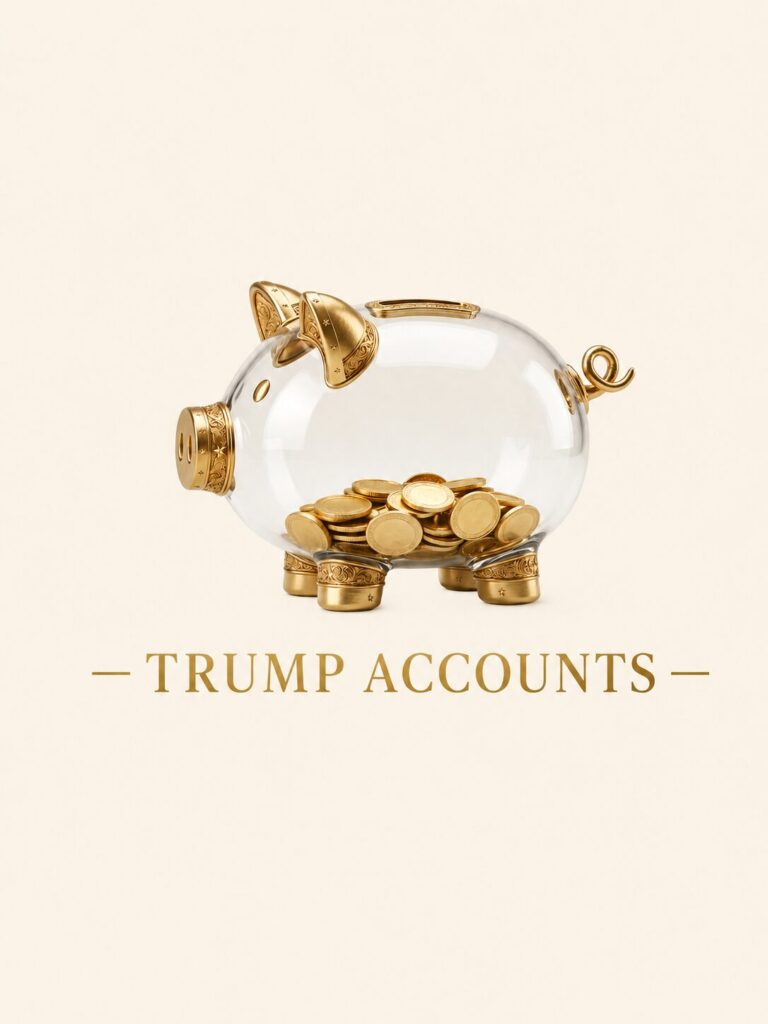
By Tanner Doudna
One of the many provisions of the OBBBA was the creation of Trump Accounts. Trump Accounts are advertised as a tax-advantaged investment account for those under the age of 18, and they officially launched on July 4th, 2026. Similar to many other financial vehicles, there are positives and negatives to Trump Accounts, and they don’t make sense for everyone.
What is it?
If I had to compare Trump Accounts to an existing investment vehicle, it most closely imitates an IRA, but for minors. At the time of this writing, Trump Accounts can only be established through the Trump Accounts app, but major institutions like Schwab and Fidelity are working towards allowing you to transfer your established Trump account to them. Once you have money in the account, the funds will be invested in low-cost mutual funds and ETFs, and will grow tax-deferred. Unlike a 529 or UTMA, Trump Accounts are meant to help save towards retirement.
How do I fund it?
- There are many ways to get money into the account, but the avenue drawing the most attention is the free $1,000 deposit from the U.S. Treasury for children born between 2025-2028.
- Those born between 2016-2024 are likely eligible for the free $250 deposit thanks to Michael & Susan Dell. You can click here to see if your child is eligible for the Dell $250 deposit.
- Above those “free” deposits, contributions are limited to $5,000 per year.
- Direct Contributions (contributions made by individuals) are the only funds that come out tax-free (if the rules are followed AND you track contributions over the years).
- All other increases to the account (employer contributions, investment growth, and Qualified General Contributions) are taxed as income when the funds are withdrawn from the account.
What does it look like long-term?
The account essentially converts to an IRA when the child reaches 18. As previously mentioned, the true intent of the account is retirement savings for children, but there are a few ways to use the funds before retirement and avoid the 10% early withdrawal penalty (higher education expenses, first-time homebuyer, etc.). There are already strategies out there related to converting these funds into Roths, but there are also some potential pitfalls to those strategies. If your child is an adult but still a dependent, there is a possibility that the Roth conversion would be taxed at your marginal tax rate.
What are some alternatives?
Trump Accounts are not the only way to save for your child’s future. Two popular alternatives will continue to be 529s and UTMAs.
- 529s are intended to pay for higher education costs, and the money comes out tax-free if used correctly.
- UTMAs have flexibility to be used for a lot more than education and retirement, but they don’t have the same tax benefits as Trump Accounts and 529s. With that said, taxes on most UTMAs we see are often slim to none.
What should I do?
Every family situation is different, so it would be wise to consult your financial advisor before picking a long-term path. You can click here for a very detailed blog from Michael Kitces about Trump Accounts.
For children born between 2016 and 2028, I advise establishing an account to get the free deposit. Above the free money, it gets complicated. Are you in a position to save for your child’s retirement before your own? Is saving for their retirement a higher priority than saving for a car, college, or other nearer-term goals? For some who are detailed and organized, there are absolutely ways to maximize the benefits of the Trump Accounts, but for most, there are likely better alternatives to save for your child’s future.