
An Overview of Trump Accounts
August 1, 2026
Quarterly Market Review: October 2026
October 1, 2026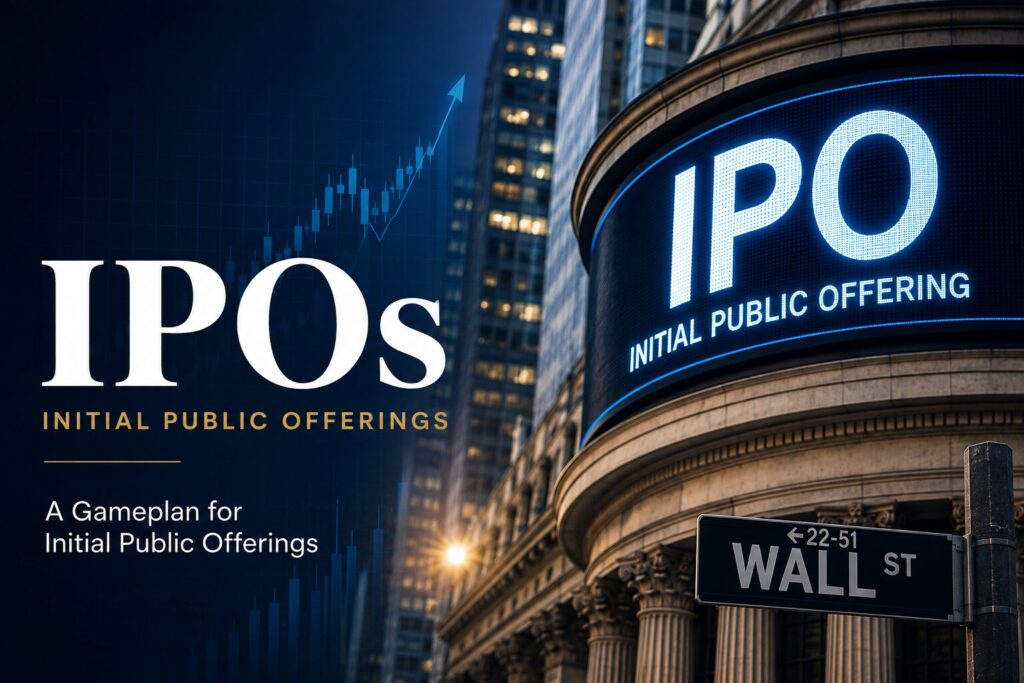
By Brett Freese
What is an IPO and how is it priced?
An IPO is the moment a privately held company sells shares of ownership (stock) to the public for the first time. Investment Banks like Goldman Sachs and JP Morgan Chase manage the pricing and distribution of the new stock, meaning: Before the stock begins trading, the Investment Bank(s) will set a final offering price based on the demand from institutional investors. We understand that there is a FOMO (Fear Of Missing Out) in pre-IPO opportunities. However, in our experience, if the “average investor” has the ability to buy into a stock before the IPO, it is generally not a profitable financial move in the short-term.
For most investors, the new stock can be purchased once the stock opens on an exchange. If there is a lot of excitement and optimism, the stock may open above the IPO price. The opposite is true as well if there is muted excitement and pessimism. Regardless, there is likely to be quite a bit of volatility in the stock’s price movement for days, weeks, and months to come.
What are the potential benefits of buying an IPO?
- Growth Potential – Investing in a newly public company allows you to participate in its initial growth stages if successful.
- Transparency – As a public company, it must now file with the Securities and Exchange Commission (SEC). Information like audited financial statements, revenue breakdowns, and risk factors need to be disclosed.
- Access and Liquidity – Private companies have little to no access for the average investor to invest in them. Subsequently, those private companies or hedge funds that do offer investor money (if they financially qualify) usually have very little to no liquidity (meaning: the ability to receive your money back out of the investment).
- You get to choose what day and what time of day during trading hour you want to buy it.
What are the potential negatives of buying an IPO?
- “Lock-up” Expiration Risk – Pre-IPO investors like the founders of the company or venture capitalists are normally subject to a lock-up period. This period is usually 90 to 180 days after the IPO and can lead to a flood of heavy selling when the lock-up ends, and the stock price may fall.
- High Volatility – History of IPO has shown that the early trading days, weeks, and months can have great fluctuations in price and even sharp drops once the excitement wears off.
- Untested as a Public Company – The pressure of reporting information, explaining results, and setting business growth expectations is difficult for any company, but especially for a new publicly traded company.
- Great Expectations – Many companies go public with expectations of strong growth potential and are often still unprofitable. Risks of overvaluation and/or shifts in macroeconomic conditions may dramatically affect the price of the stock.
Our current game plan with IPOs
Our current approach to IPOs is to have a strong awareness of new and soon-to-be IPOs, but allow for the individual fund managers (that we have chosen for our client’s portfolios) to use their wisdom, process, and discretion on when or if to add an IPO. Additionally, as IPOs are added to indices like the S&P 500, they will, of course, be added to the funds that follow and invest in those indices. There is a risk of missing out on initial gains, but that is rarely the case and/or small in comparison to the gains of the stock if it is successful over the long-term.
IPOs play an important role in the success of the financial markets over the long-term. We approach them with both excitement and historically proven patience and wisdom.